

Photo by Bettmann Archive/Getty Images
“There were lights and sirens…”
The opening line of Assata Shakur’s autobiography has echoed across generations of youth, students, scholars, and activists. In just a few words, she pulls readers directly into a moment of urgency and danger, a moment that resonates deeply with anyone familiar with the realities of policing in the United States.
Her autobiography, first published in the 1980s, has transformed lives in ways reminiscent of The Autobiography of Malcolm X and the writings of Walter Rodney.
Born Joanne Deborah Byron in Queens, New York, Assata joined the Harlem office of the Black Panther Party in her early twenties after first learning more about the party while visiting its Oakland headquarters. She entered the office ready for work and quickly immersed herself in the day-to-day demands of the movement.
She later recalled that the headquarters appeared chaotic and that no one was quite sure what had become of the second page of her application form. Even so, she sensed a purpose there, and she stayed.
Soon after, she left the Panthers and joined the Black Liberation Army (BLA), a more clandestine formation committed to armed struggle and community defense.
When J. Edgar Hoover declared the Panthers “the greatest threat to the internal security of the country,” the FBI’s counter-intelligence program (COINTELPRO) intensified its efforts to infiltrate, disrupt, and dismantle the organization.
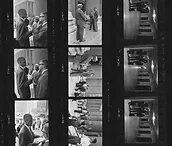
Conflict between the BLA and law enforcement culminated in many violent encounters, most fatefully a shoot-out that left State Trooper Werner Foerster and Black Panther member Zayd Shakur dead in 1973. At Shakur’s funeral, captured in the photo below, mourning comrades follow his casket down a Harlem street. To honor him, Assata later adopted the surname Shakur, meaning “the thankful.”

Photo by Bettmann Archive/Getty Images
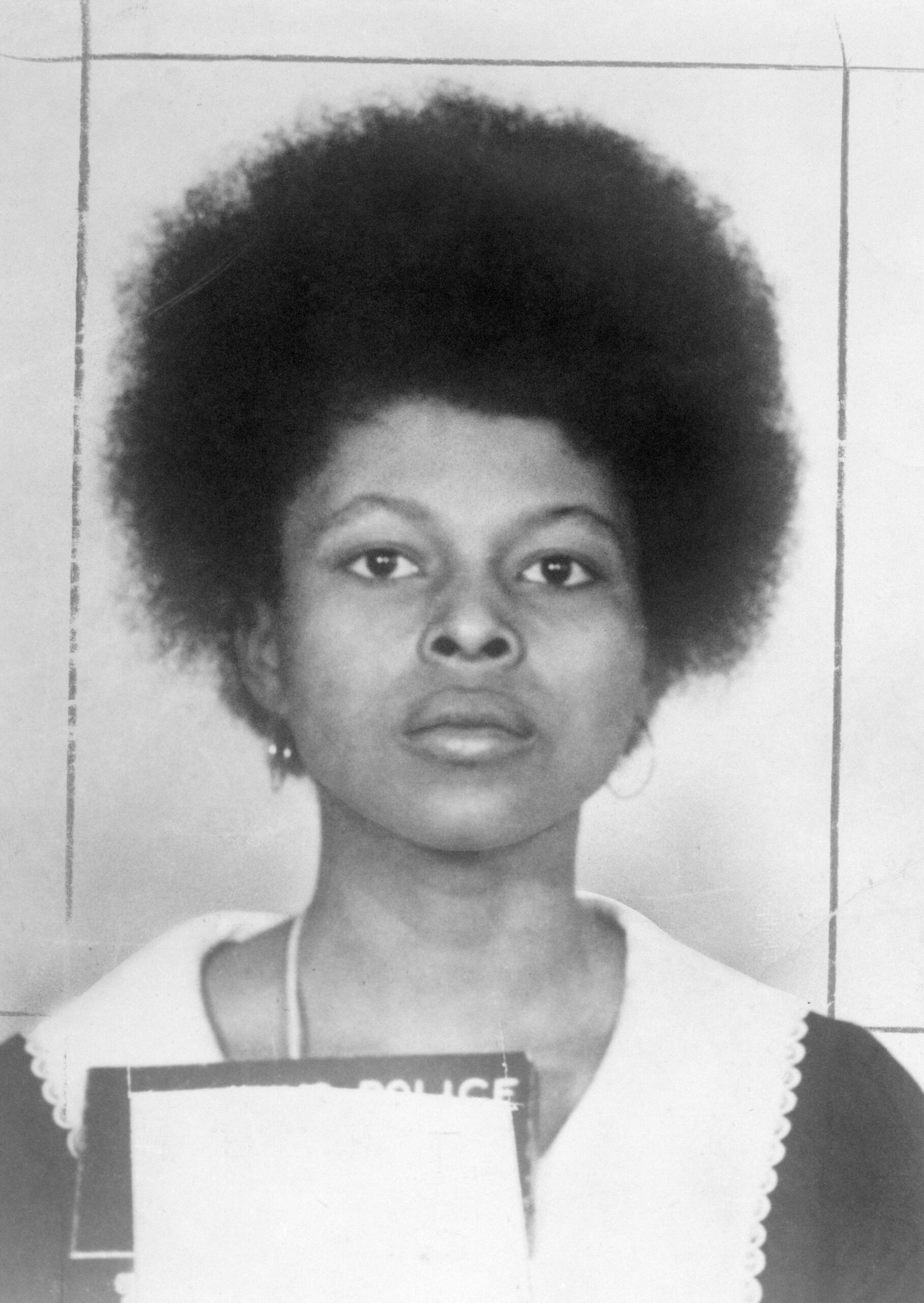
Assata and Sundiata Acoli were arrested in connection with Foerster’s death, and she spent months confined in hospitals before being shuttled through several prisons. (Her mug shot from the arrest opens this essay.) She later described torture, harassment, and constant surveillance. Her personal experiences exemplified the broader patterns of violence and criminalization directed at Black revolutionaries during the height of Black Power organizing.
Despite maintaining that she could not have fired shots at the state troopers because her arm was injured, she was convicted of murder and given a life sentence in 1977.
The trial itself was steeped in racial and political bias. Every member of the jury was white, making it impossible to claim she was judged by a jury of her peers. Reflecting on the proceedings, her attorney Lennox Hinds described the trial as “a legalized lynching.” While some of her comrades, such as Sekou Odinga, Mutulu Shakur, and Russell “Maroon” Shoatz, were eventually freed before their passing, many remain long-serving political prisoners. Mumia Abu-Jamal and Kamau Sadiki are still incarcerated.
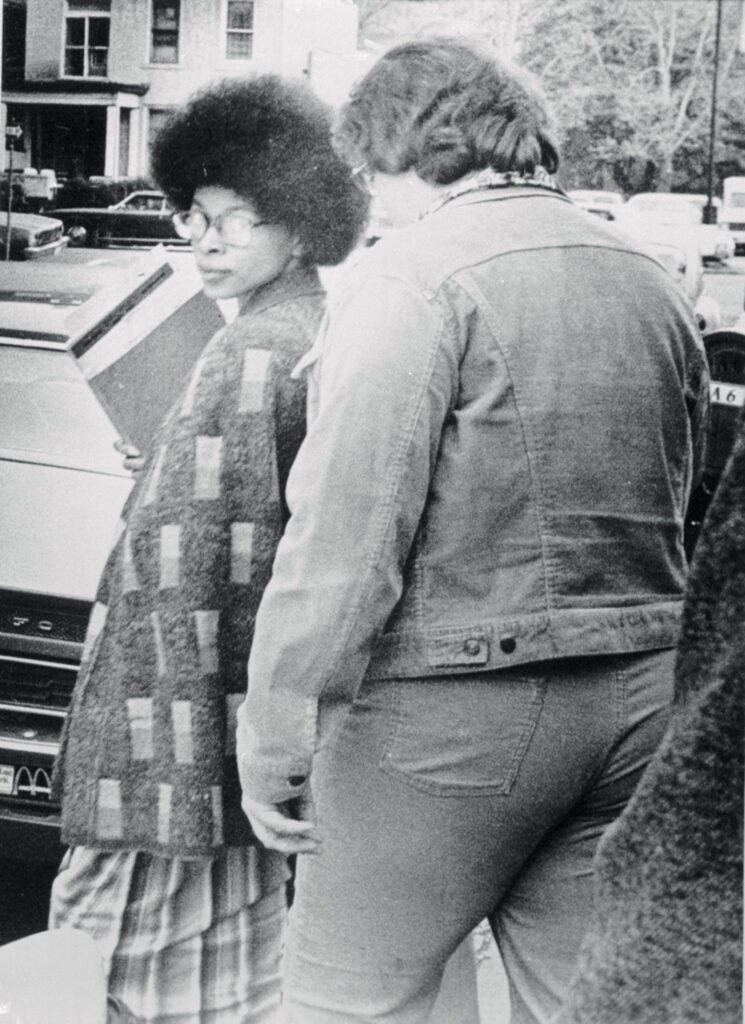
Photo by Bettmann Archive/Getty Images
However, she escaped from the Clinton Correctional Facility for Women on November 2, 1979, with the help of comrades committed to her liberation. (She is photographed above leaving a federal court in Trenton, New Jersey, after requesting to be transferred to the minimum-security Clinton prison.)
After her 1979 escape, Assata went underground and ultimately made her way to Cuba, where Fidel Castro granted her political asylum. She lived there, continuing to write, teach, and correspond with activists in the United States, the Caribbean, and across the African diaspora. She died there on September 25, 2025.
Assata’s life continues to resonate widely with students, youth, and those committed to the Black freedom struggle.
Her autobiography remains a foundational text in classrooms and movement spaces alike, offering readers both a searing critique of state repression and a model of uncompromising political clarity. For young people encountering her story for the first time, Assata represents courage in the face of overwhelming odds and a refusal to surrender dignity and political beliefs against capitalism and imperialism.
Her words, quoted on murals, study guides, protest signs, and social media, have fueled new generations of organizers who see their own experiences reflected in hers.
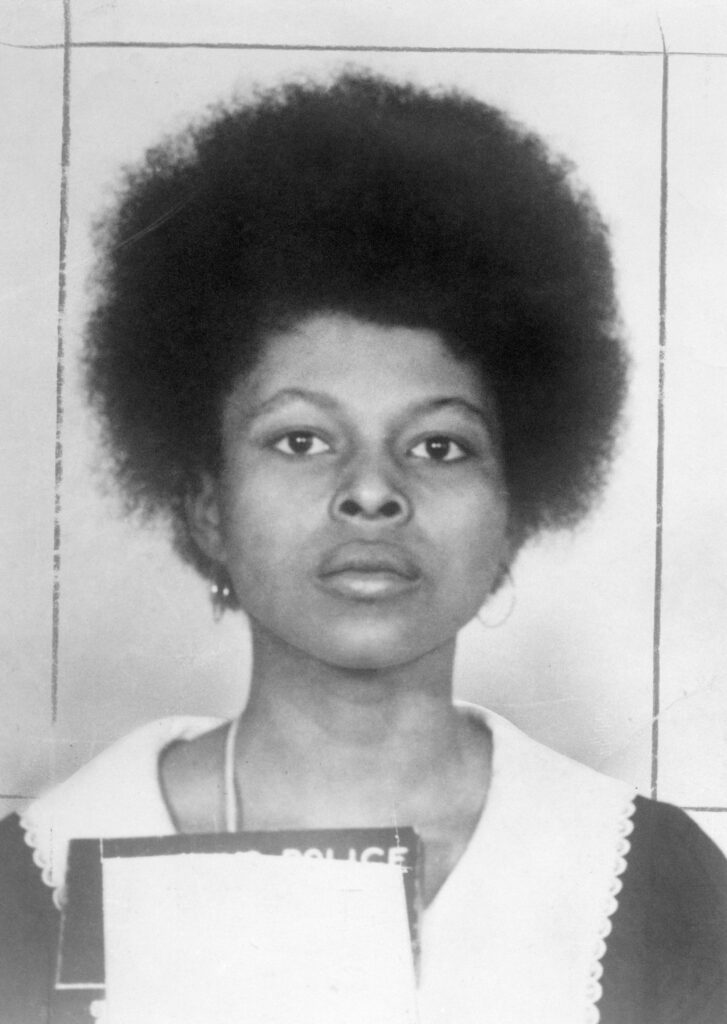
Photo by Bettmann Archive/Getty Images
This excerpt of a poem written by Assata is frequently used as a chant during protest and marches. It expresses the need for oppressed people globally to fight for liberation.
It is our duty to fight for our freedom.
It is our duty to win.
We must love each other and support each other.
We have nothing to lose but our chains.
Even in exile, she remained a guiding voice, reminding emerging activists that the struggle for liberation requires study, practice, resistance, and genuine community. Her influence endures, shaping how students understand the Black Power era and inspiring them to imagine new futures rooted in justice and collective freedom.

Learn more:
Assata Shakur, Assata: An Autobiography.
Evelyn Williams, Inadmissible Evidence: The Story of the African-American Trial Lawyer who Defended the Black Liberation Army.
Safiya Bukhari, The War Before: The True Life Story of Becoming a Black Panther, Keeping the Faith in Prison, and Fighting for Those Left Behind.