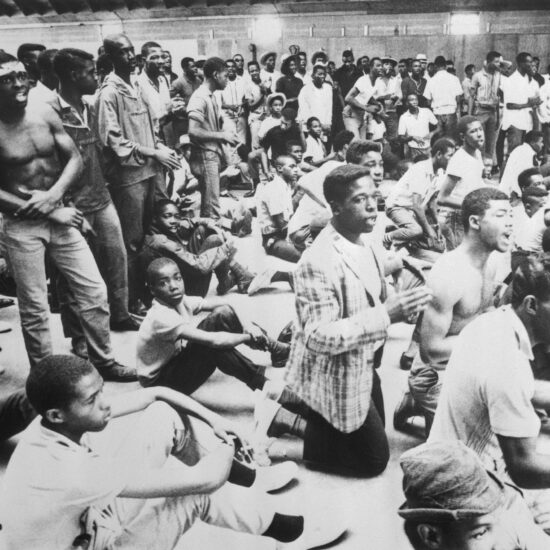
The Emmett Till Generation
Youth Activism in Jim Crow Jackson, Mississippi, 1963.

A collaboration of  and
and 
Youth Activism in Jim Crow Jackson, Mississippi, 1963.
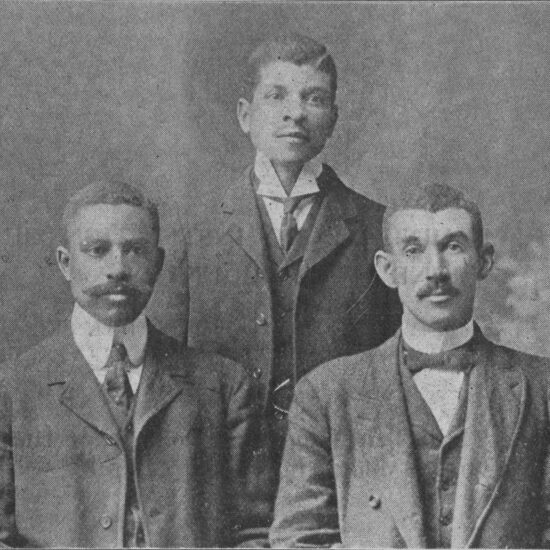
A symbol of hope and resilience, NC Mutual provided essential financial support to African American and working-class communities for more than a century.

Pittsburgh’s segregated Hill District became a hub of jazz and Black culture. Charles “Teenie” Harris, the renowned photographer and chronicler of Black life, captured it all.
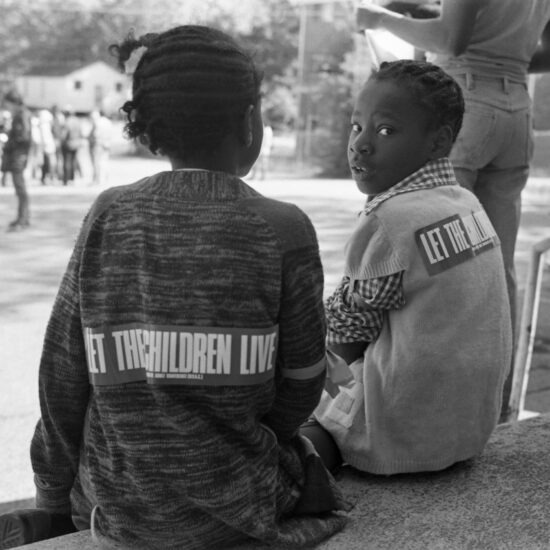
In his last and least known book, James Baldwin demonstrates how the Atlanta Child Murders were not an aberration but rather evidence of the failures of integration, the growing divide between the Black poor and the middle classes, and the need to claim the dead as our own.
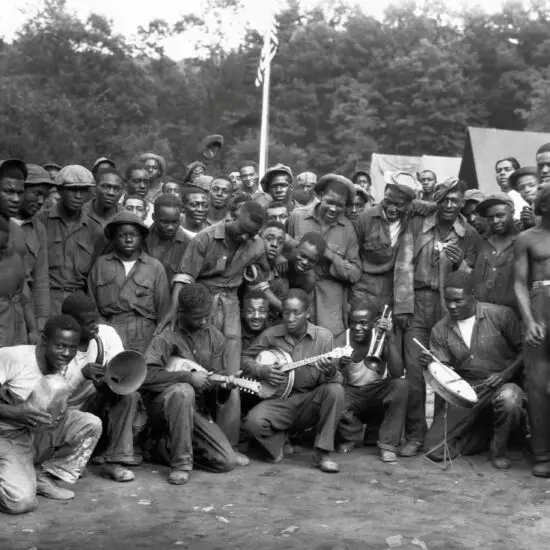
The Civilian Conservation Corps, one of Franklin Delano Roosevelt’s most popular New Deal programs, provided work, education, and recreation opportunities for hundreds of thousands of young African American men.
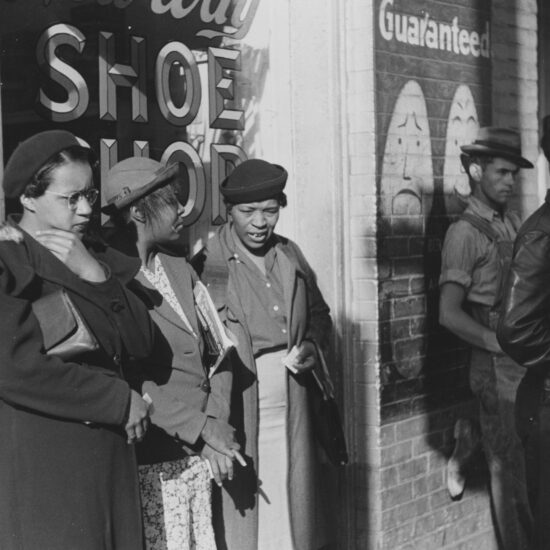
The everyday lives and struggles of Black women in Atlanta reveal the roots of their activism.
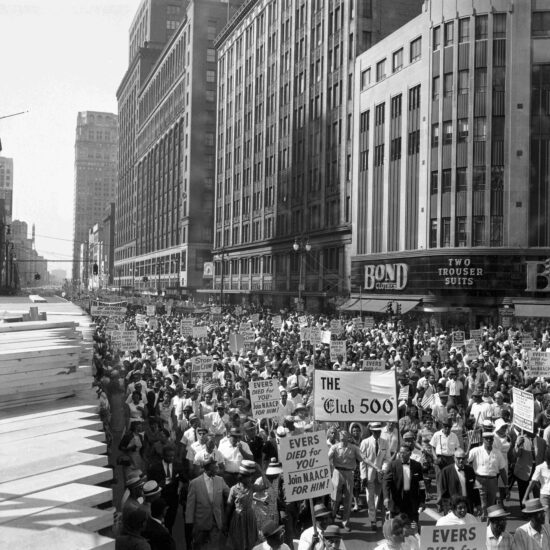
For one day in June 1963 Detroit was the center of the civil rights movement.
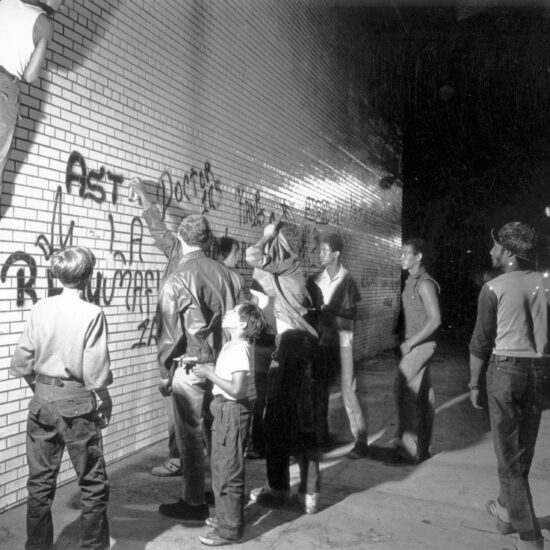
“Coming to a Wall Near You!” From the 1960s to 1980s, Black teenagers in Philadelphia convinced the world that graffiti wasn’t vandalism, but public art rooted in protest and self-expression.
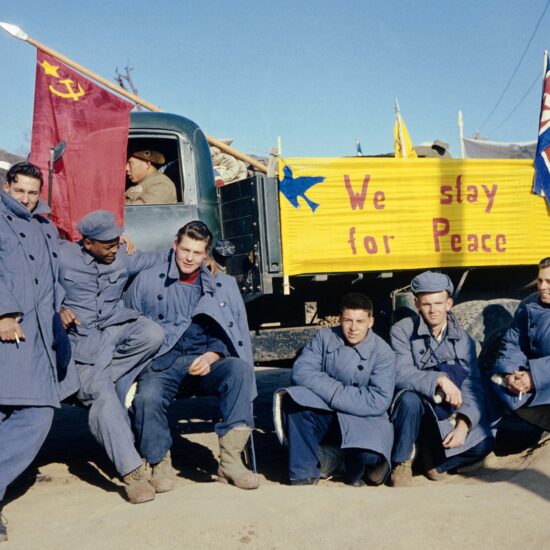
Some Black soldiers chose not to go home after the war, remaining in North Korea and China—behind the “bamboo curtain”—to escape racism in the United States.
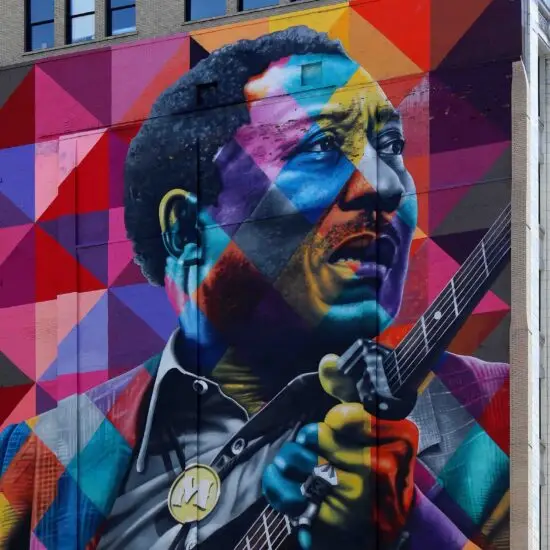
Bluesman Muddy Waters went from the Mississippi cotton fields to Chicago and changed the face of American music.