

Photo by Bettmann Archive/Getty Images
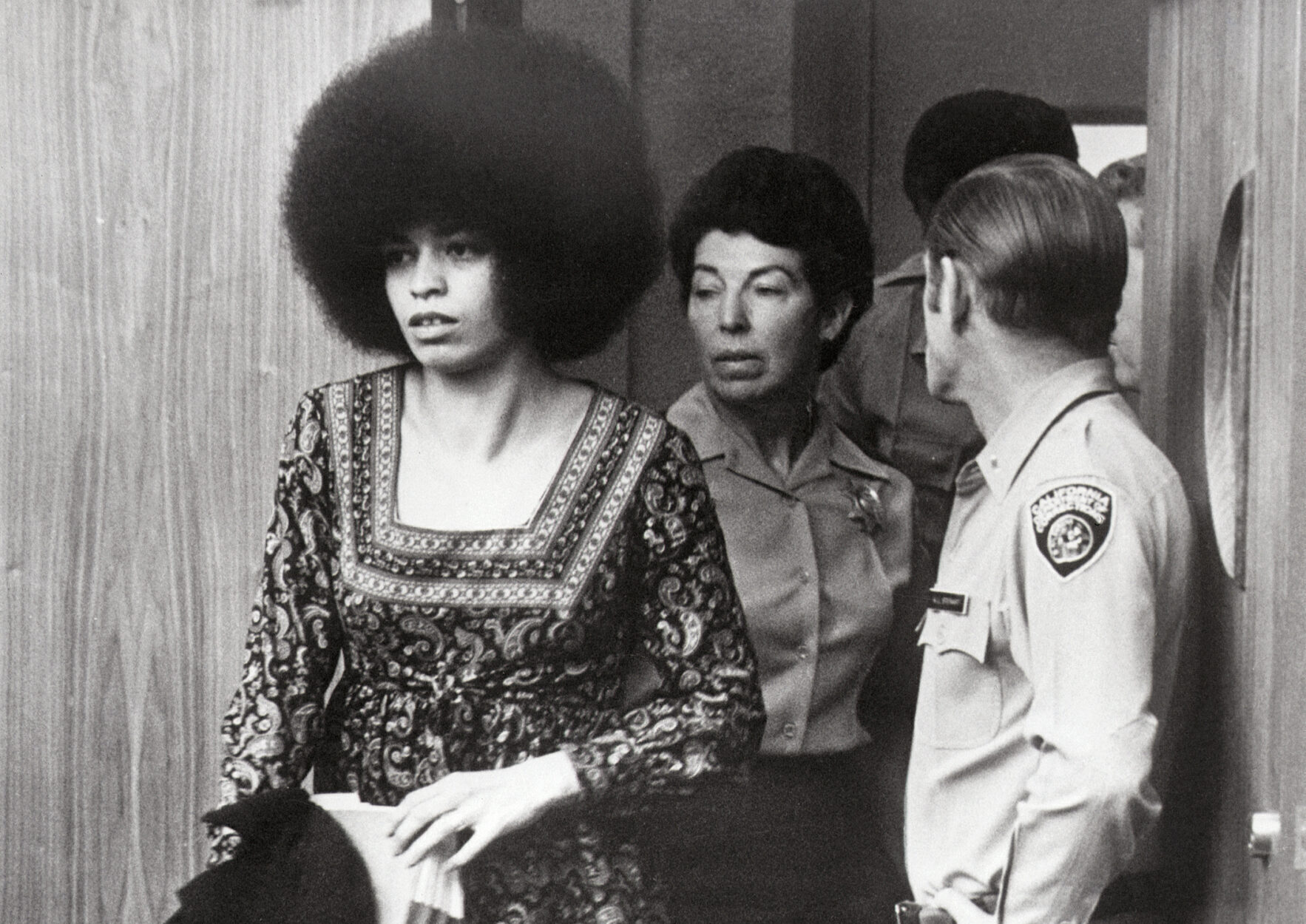
During the 1970s, African American activist and Communist intellectual Angela Davis was tried for kidnapping, conspiracy, and murder in connection with an armed seizure of a Marin County courthouse in California.
She was only the third woman ever to be placed on the FBI’s Top 10 Most Wanted Fugitives list.
That same year, Davis became involved in a campaign to liberate the Soledad Brothers, three prisoners accused of the murder of a correctional officer at a California state prison.
An international movement soon emerged—“Free Angela and All Political Prisoners”—and Davis’s image circulated globally through newspapers, the press, and “Free Angela Davis” buttons. She was acquitted in 1972. Within two years, she had become a global icon and symbol of Black radicalism and liberation.
Not only did her revolutionary rhetoric and politics inspire millions, but so too did her revolutionary hairstyle—the Afro.
While on trial, Davis wore a large and shapely Afro, as seen in the image above of Davis entering a San Rafael, CA courtroom for a pre-trial hearing, June 15, 1971.
Many Black Americans considered the Afro a “natural” look, inspired by the Black Power Movement, which emphasized Black self-reliance and self-determination. During the 1960s and 1970s, the Afro became a symbol of Black pride.
Previously, many Black people sought to emulate white societal standards of beauty. This resulted in many straightened styles and short haircuts.
The slogan “Black is Beautiful” became a powerful mantra during the era. To many, the Afro fostered pride in Black identity and aesthetics while simultaneously challenging long-standing Eurocentric beauty standards and combating internalized anti-Blackness.
The Black Power Movement inspired various forms of revolutionary style and race-consciousness ideologies during this period. Black communities connected and communicated identity through what were considered African-inspired styles, including the Afro.

Photo by Bettmann Archive/Getty Images
Worn by professionals, celebrities, and models, natural and African-inspired hairstyles took center stage. African-inspired looks such as the Afro became so popular that hairstylists like Charles Booth created this “shaped, bushy wig for girls who want the black look,” as seen in the photo above. Booth directly connected his wig to Africa by naming it “Zulu”—the largest nation and ethnic group in South Africa.
In the image, the model sports an Afro wig and gazes upward, as if in awe. To evoke an African identity, the model wears markings consisting of lines and arrow- or spear-like drawings on her cheeks.
The image highlights the growing connections many Black Americans made between hair, identity, and Africa. It also demonstrates how the Afro became so popular that it was commercialized and marketed to consumers through products such as Afro wigs, hair sprays, and other hair-care items. By the early 1970s, the Afro had become so culturally powerful that even artificial wigs were marketed to help consumers achieve the “Black look.”
Nonetheless, style, including hair, furthered Black Power as Black people confronted racial injustice using aesthetics. This was reflected not only in the styles of models and consumers but also in militant Black Power organizations such as the Black Panther Party (BPP).
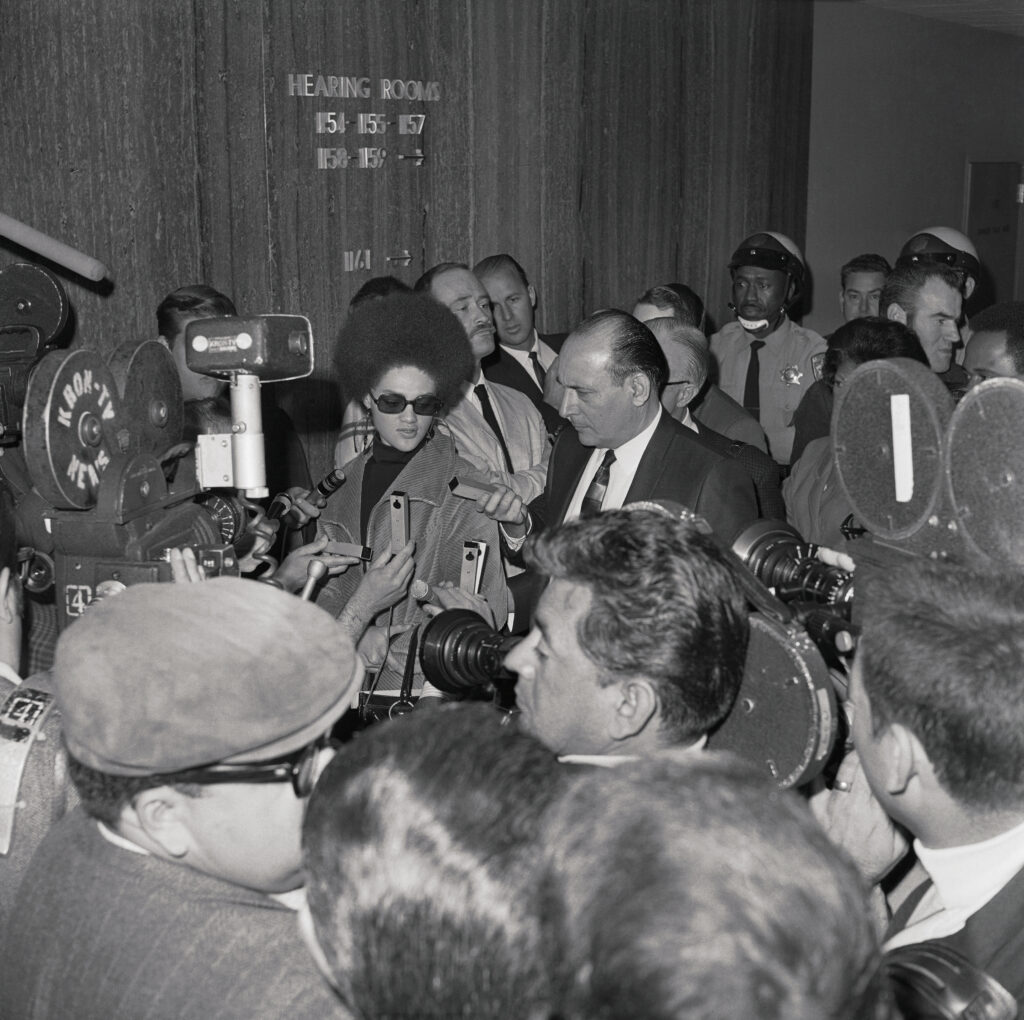
Photo by Bettmann Archive/Getty Images
Kathleen Cleaver, BPP Communications Secretary and wife of BPP Minister of Information Eldridge Cleaver, embodied this revolutionary politics of style, as seen in the image above.
In the photograph, Cleaver is accompanied by her lawyer, attorney Charles Garry (right), as newsmen question her after her husband failed to surrender to authorities following a parole violation. Cleaver wears a large, shapely Afro, black shades, a black turtleneck, and a leather jacket.
Black women like Cleaver were central to the BPP’s functioning and success. Not only did they shape the organization’s political work, but they also helped shape its visual identity. Cleaver’s look closely resembled the BPP’s recognizable style, which included leather jackets, natural hair, berets, and dark shades.
This striking aesthetic captivated the media, which frequently photographed and reported on BPP leaders such as Huey Newton, Bobby Seale, and Eldridge Cleaver.
At the same time, however, Black women like Kathleen Cleaver also proudly wore natural hairstyles. Not disconnected from her radical politics, Cleaver’s Afro and embrace of a natural, revolutionary aesthetic are often associated with militancy and political radicalism.
Like her male counterparts, Cleaver also appeared on magazine covers and in newspapers. In doing so, she embodied a radical politics of style that linked Black liberation, gender, and revolutionary identity and disseminated that imagery nationally.
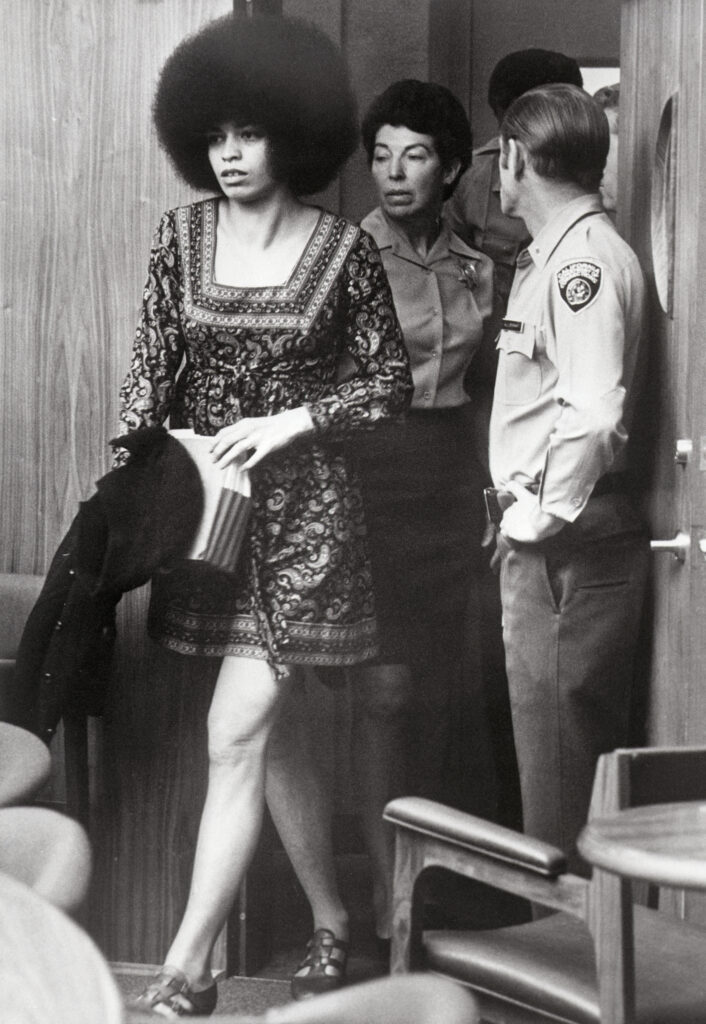
Photo by Bettmann Archive/Getty Images
During the 1960s and 1970s, the Afro became more than simply a hairstyle. It emerged as a revolutionary look that expressed Black pride and political consciousness. Popularized by activists like Angela Davis and organizations like the Black Panther Party, the Afro became a political statement for both Black men and Women.
Equally, the hairstyle became a fashion statement. Taken together, the Afro functioned as a powerful visual statement that challenged Eurocentric beauty standards and affirmed a new sense of Black identity.
In an era defined by struggles for racial justice and liberation, the Afro signaled that Black was not only beautiful but powerful.
September 13, 2026

Learn more:
Davis, Angela Y. Angela Davis: An Autobiography. New York: Random House, 1974.
Farmer, Ashley D. Remaking Black Power: How Black Women Transformed an Era. Chapel Hill, NC: University of North Carolina Press, 2017.
Ford, Tanisha C. Liberated Threads: Black Women, Style, and the Global Politics of Soul. Chapel Hill, NC: University of North Carolina Press, 2017.
Spencer, Robyn C. The Revolution Has Come: Black Power, Gender, and the Black Panther Party in Oakland. Durham, NC: Duke University Press, 2016.