

Photo by Bettmann Archive/Getty Images
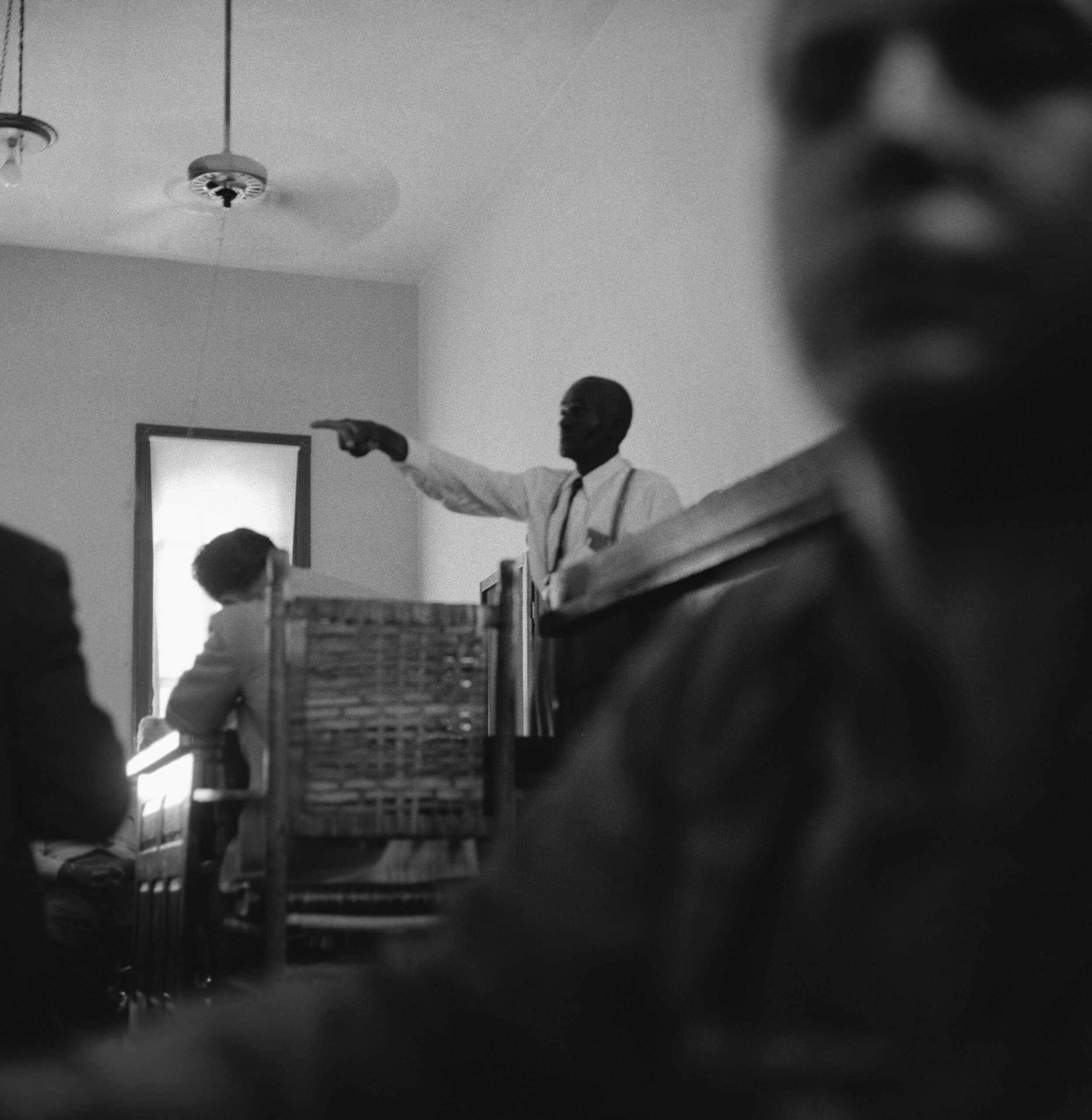
In what author David Mason called “one of the most indelible images of the Civil Rights Movement,” Mose Wright, great uncle of Emmett Till, testifies at the September 1955 murder trial of Roy Bryant and J.W. Milam. Earlier in the summer, the two men had kidnapped, beaten, and murdered Emmett and dumped his body in a local river.
In the face of harassment, threats, and even possible death, Wright chose to speak for his nephew and bravely named Emmett’s killers. Wright’s testimony shows that Black fear and resistance coexisted during the civil rights era.
The moment the young teenager was forcibly removed from Wright’s Mississippi delta home in the middle of the night marked the beginning of Wright’s misery. He pleaded with the two men not to take his nephew but was helpless as Emmett was dragged away at gunpoint.
As they took Emmett, Bryant and Milam threatened Wright, saying: “How old are you preacher? If you make any trouble you’ll never live to be 65.” A summer family gathering, for which Emmett had come from Chicago, had turned into Wright’s worst nightmare.
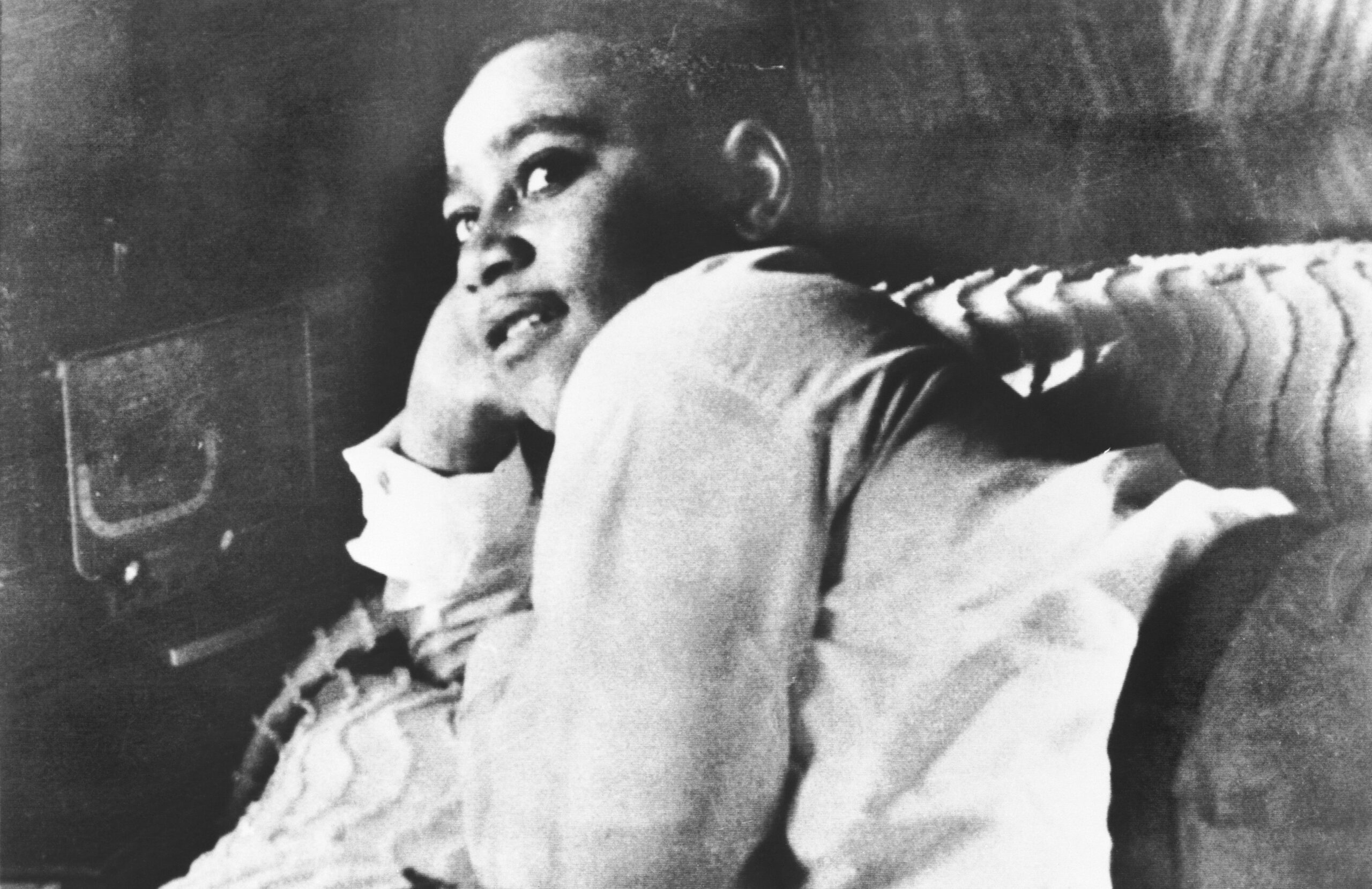
Photo by Bettmann Archive/Getty Images
Emmett (photographed above in happier times in Chicago) was missing for three days before his body was discovered by local Mississippi officials.
After the body was pulled from the water, Wright was instructed by Sheriff Clarence Strider of Tallahatchie County to identify the badly decomposed body, tasked with burying his remains, and told not to notify Emmett’s mother. The burial in Mississippi did not happen, but these events left Wright traumatized.
The photo above captures Wright pointing into the distance of the courtroom. As he gestured towards the murderers, he spoke the words, “Thar he,” or “there he is.” Wright recalled later feeling “the blood boil in the hundreds of white spectators” in the courtroom. The almost entirely white courtroom that Wright confronted can be seen in this image.
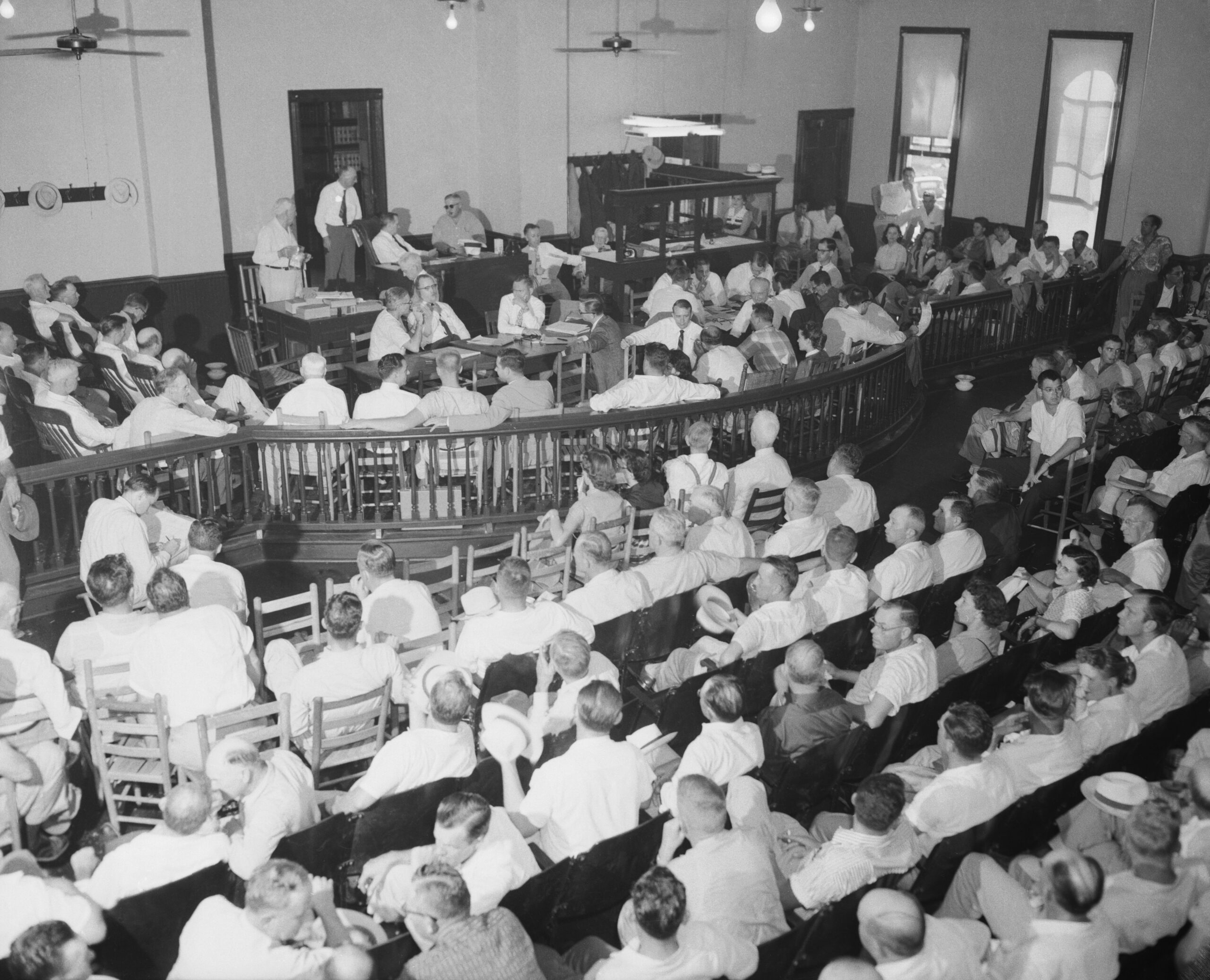
Photo by Bettmann Archive/Getty Images
Wright is pointing to the accused, his arm slightly bent in a perhaps more hesitant gesture. As a Black man living in Jim Crow Mississippi, testifying against two white men was very rare, and could result in severe, even fatal consequences.
Mamie Till, Emmett’s mother, called this image “the single most significant picture of the entire trial.”

Photo by Bettman Archive/Getty Images
Ernest Withers, an important Black photojournalist from Memphis, Tennessee, took the iconic photo. He specialized in documenting the everyday life of African Americans, especially events central to the civil rights movement in the United States.
The face of a young boy is captured in the frame perhaps because Withers had to snap the photo quickly, not having time to angle it adequately. The judge did not allow photography during the trial, so Withers had defied the rules of the courtroom to capture this important moment of Black resistance.
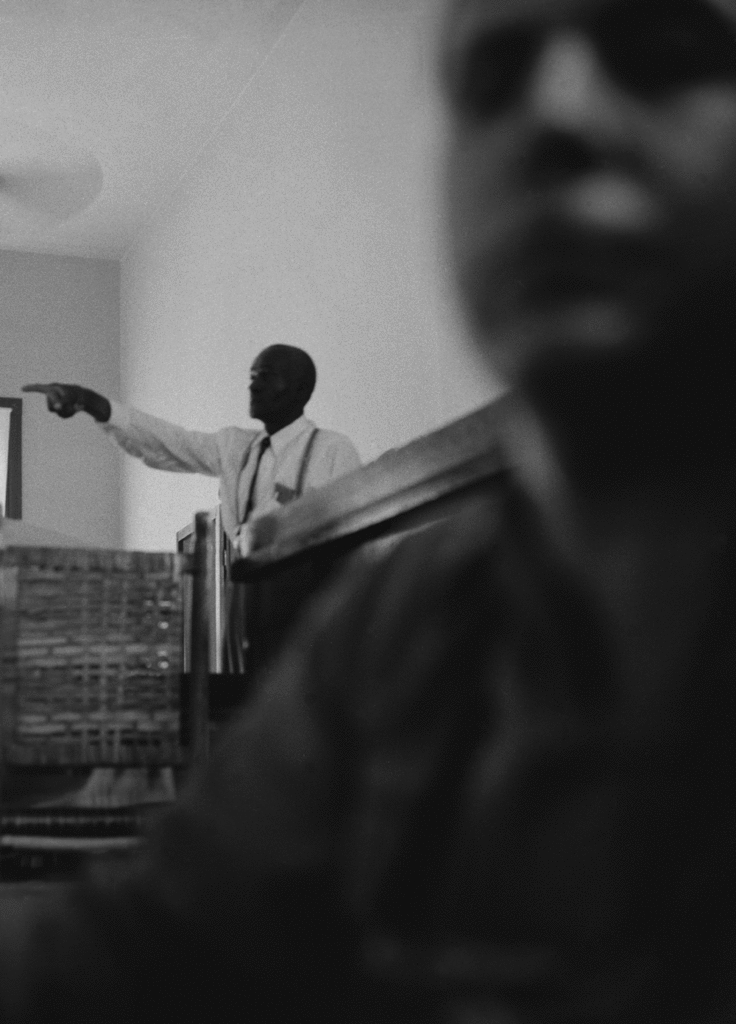
Photo by Bettman Archive/Getty Images
Ignoring the death threats from Milam and Bryant, Wright was determined to challenge the status quo of silence. The mere act of Wright gesturing his index finger toward the murderers constituted an act of defiance of white supremacy.
This life altering experience left Wright restless and frightened. He moved away from Mississippi directly after the murder trial ended in September 1955.
But Wright was called again as a witness for the grand jury hearing for Milam and Bryant’s kidnapping charge in November of the same year. The grand jury failed to indict the two men on those charges, and Wright fled Mississippi again, never to return.
This photograph of Mose Wright testifying visualizes the trauma that Black people endured under the oppressive Jim Crow system, but also their resistance. Regardless of the trials (literally) and tribulations that Wright endured, resilience triumphed over fear.
January 29, 2026

Learn More:
“The Murder of Emmett Till,” The American Experience, https://www.pbs.org/wgbh/americanexperience/features/emmett-biography-moses-and-elizabeth-wright/.
Davis W. Houck and Matthew A. Grindy, Emmett Till and the Mississippi Press, (University Press of Mississippi, 2008)
David Mason, “That Memphis Photographer: How Ernest Withers captured THE photo of the Emmett Till murder trial.” Story Board Memphis, https://storyboardmemphis.org/featured-story/that-memphis-photographer-how-ernest-withers-captured-the-photo-of-the-emmett-till-murder-trial/.