

Photo by Bettmann Archive/Getty Images
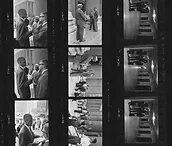
This photograph of more than 25,000 people marching to the base of the Alabama Statehouse on March 25, 1965, stands as an emblem of a movement that reshaped American democracy.
Yet the image’s power can mislead. It compresses decades of preparation, sacrifice, and everyday effort into a single moment. To draw durable lessons from the Selma to Montgomery March, we must shift focus from the photo’s foreground to the extensive networks, local leadership, and household-level labor that made mass mobilization possible.
Long before national headlines focused on Selma, local structures sustained resistance to Black voter disenfranchisement. The Dallas County Voters League (DCVL), formed in the early 1920s by Charles Adams, exemplified persistent, place‑based insistence on political inclusion.
When Adams departed Selma under threat and the NAACP was excluded from Alabama in 1957, Samuel and Amelia Boynton reignited voter recruitment efforts and nurtured the continuity of local organizing.
Leaders such as Rev. Frederick D. Reese, Marie Foster, Rev. John D. Hunter, Ulysses Blackmon Sr., Ernest Doyle, James Gildersleeve, and Rev. Henry Shannon Sr. built knowledge about registration obstacles and cultivated strategies to contest them.
This patient work produced a leadership core who understood the unique social and economic dynamics of the Alabama Black Belt and the local mechanisms of white supremacist control.
That grounding was indispensable: national groups needed embedded partners who knew the legal terrain, the likely reprisals organizers faced, and how to sustain long campaigns amid economic and physical threats.
(The two photos below capture an unconscious Amelia Boynton, March 7, 1965, after being attacked by police. She is held by another civil rights marcher with face covered to protect from the tear gas that mounted police officers sprayed.)
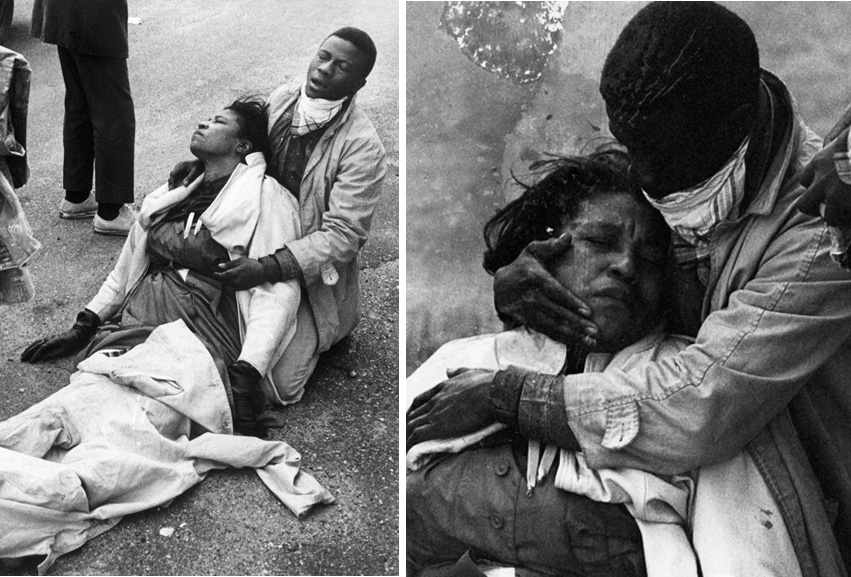
Photo by Bettmann Archive/Getty Images
Photo by Bettmann Archive/Getty Images
When the Student Nonviolent Coordinating Committee (SNCC) arrived in late 1962, its presence layered youth energy and novel tactics onto deep local experience.
SNCC organizers, led by Bernard Lafayette and, later, Rev. Prathia Hall, brought direct-action skills honed in the 1961 Freedom Rides and other actions across the South.
Their efforts were not a replacement for local leaders but an amplification: they recruited young demonstrators whose parents and elders feared job loss or violence, and knew the communities better than anyone. The Boyntons’ legacy specifically—visible in legal victories such as Boynton v. Virginia (1960)—created legal and moral precedents that SNCC and others could leverage.
This intergenerational alliance reveals a central pattern of successful movements: a division of labor and risk. Older leaders supplied local legitimacy and institutional knowledge; youth provided boldness and capacity for disruptive tactics that drew publicity.
Both roles involved sacrifice—economic reprisals, arrests, and personal danger—and both were necessary to escalate a local grievance into a national crisis.
In January 1965, at the invitation of the DCVL, the Southern Christian Leadership Conference (SCLC) entered Selma with national leaders including Rev. Dr. Martin Luther King Jr. SCLC’s presence galvanized national media and added federal political pressure.
SNCC and SCLC had different philosophies and preferred tactics; disagreements over leadership, timing, and strategy were common. These strategic frictions are crucial to recognize. Movements that succeed are coalitions that negotiate differences, reconcile competing priorities, and organize around shared objectives.
In Selma, the shared objective—protecting and expanding Black voting rights—served as the adhesive for alliances. What united activists across organizations was not an identical strategy but consistent acts of resistance: marches, registration drives, economic boycotts, and moral appeals that together changed public opinion and raised the political cost of inaction.

Photo by Bettmann Archive/Getty Images
We should not let images of mass marches obscure the countless acts of private solidarity that sustained public protest. Black families and homeowners opened their doors, prepared meals, offered beds or floor space, and lent emotional support.
The home of Dr. Sullivan Jackson and Richie Jean Sherrod Jackson at 1416 Lapsley Street exemplifies this hospitality. Dr. Jackson, a dentist and WWII veteran, and Mrs. Jackson, an educator, took on great professional and personal risks to host movement leaders. Their home became a site where strategists and volunteers rested, conferred, and drafted elements that would influence the Voting Rights Act of 1965.
Along the march route, farms owned by David Hall, Rosie Steele, and Robert Gardner served as encampments for hundreds traversing 54 miles between March 21 and March 25, 1965.
People power, in practice, meant more than bodies in the streets. It meant late‑night conversations in kitchens, borrowed mattresses, and neighbors pooling scarce resources despite the risk of violent backlash.
Historic media images often create a dominant narrative that privileges dramatic confrontations—Bloody Sunday, rousing keynote speeches, a legislative victory—without tracing the connective tissue that made those turning points possible.
Taking a deeper look at the Selma voting rights campaign teaches a different lesson: durable change emerges from organizational depth, intergenerational alliances, material support networks, and political strategy that can shift from local to national arenas, all rooted in the might of communities made up of willing individuals whose names are too often lost to time.
Selma reminds us that true movement building is less a flash of inspiration than a long accumulation of connection, courage, and care.
May 24, 2026

Learn more:
Ari Berman, Give Us the Ballot: The Modern Struggle for Voting Rights in America (2015)
David Garrow, Protest at Selma: Martin Luther King, Jr., and the Voting Rights Act of 1965 (1978)
Rev. Frederick D. Reese and Kathy M. Walters, Selma’s Self Sacrifice (2019)
Gary May, Bending Towards Justice: The Voting Rights Act and the Transformation of American Democracy (2013)
The Henry Ford, The Dr. Sullivan and Richie Jean Sherrod Jackson Home, https://www.thehenryford.org/visit/greenfield-village/jackson-home/
Karlyn Forner, Why the Vote Wasn’t Enough for Selma (2017)
Richie Jean Sherrod Jackson, The House by the Side of the Road: The Selma Civil Rights Movement (2011)